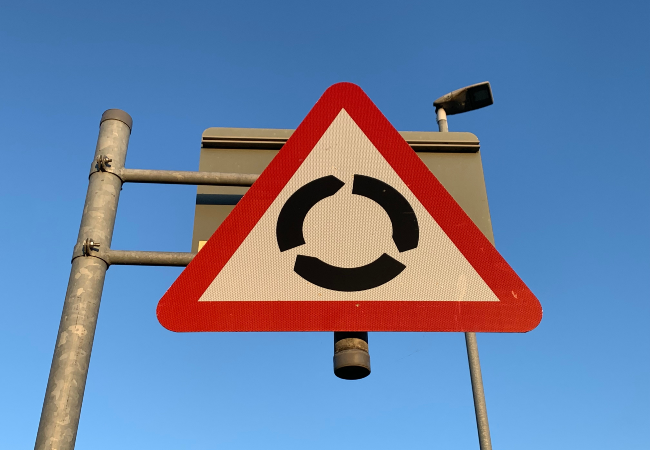

Introduction to mini roundabout vs roundabout sign
Understanding the difference between a mini roundabout and a standard roundabout sign is essential for anyone driving on UK roads. While both are designed to manage traffic flow efficiently, they serve slightly different purposes and are used in different environments. Many drivers, especially learners or those new to British roads, often confuse the two due to their similar structure and rules.
In the United Kingdom, road signage and markings are carefully regulated to ensure consistency and safety. Mini roundabouts are typically found in urban areas with limited space, while standard roundabouts are larger and more common on main roads and junctions. Recognising the signs and knowing how to respond appropriately can significantly improve road safety and reduce confusion.
What is a mini roundabout
A mini roundabout is a smaller version of a traditional roundabout, usually marked by a painted white circle in the centre of a junction. Unlike standard roundabouts, mini roundabouts do not have a raised central island, making them more suitable for tight urban spaces where a full roundabout would not fit.
Despite their size, mini roundabouts follow the same basic rule: give way to traffic coming from the right. However, because of their compact design, drivers are expected to navigate them quickly and efficiently without stopping unnecessarily. This helps maintain traffic flow in busy residential or city areas where congestion can easily build up.
What is a roundabout sign
A standard roundabout sign indicates a larger, more complex junction where traffic flows in a circular direction around a central island. These roundabouts often include multiple lanes, exits, and sometimes traffic signals to manage high volumes of vehicles.
The roundabout sign itself is a circular blue sign with white arrows forming a loop, symbolising the direction of traffic flow. It warns drivers to slow down, prepare to give way, and choose the correct lane before entering. These roundabouts are commonly found on major roads, motorways, and rural intersections across the UK.
Key differences between mini roundabout and roundabout sign
The main difference between a mini roundabout and a standard roundabout lies in their size, structure, and usage. Mini roundabouts are designed for smaller spaces and simpler traffic situations, whereas standard roundabouts accommodate larger volumes of traffic and more complex movements.
Another key distinction is visibility and road markings. Mini roundabouts rely heavily on painted road markings and smaller signs, while standard roundabouts are more clearly defined with physical islands, signage, and lane markings. This makes standard roundabouts easier to identify from a distance, especially for unfamiliar drivers.
Visual comparison of mini roundabout vs roundabout sign
| Feature | Mini Roundabout | Standard Roundabout |
| Size | Small | Large |
| Central island | Painted circle | Raised physical island |
| Location | Urban streets | Main roads and highways |
| Traffic volume | Low to moderate | Moderate to high |
| Sign visibility | Less prominent | Highly visible |
| Lane complexity | Simple | Often multi-lane |
Rules for driving at a mini roundabout
Driving at a mini roundabout requires awareness and quick decision-making. The primary rule is to give way to vehicles approaching from the right, just as you would at a standard roundabout. However, due to the smaller size, drivers should avoid stopping unless absolutely necessary, as this can disrupt the flow of traffic.
It is also important not to drive over the central marking unless your vehicle is too large to navigate around it. In such cases, caution must be exercised to avoid endangering other road users. Proper signalling and positioning are essential to communicate your intentions clearly to others.
Rules for driving at a standard roundabout
Standard roundabouts involve more detailed rules, particularly when multiple lanes are present. Drivers must choose the correct lane based on their intended exit and signal appropriately when entering and leaving the roundabout. Failing to do so can lead to confusion and potential accidents.
As with mini roundabouts, giving way to traffic from the right is crucial. However, drivers must also be mindful of lane discipline and speed. Larger roundabouts often require more time and attention to navigate safely, especially during peak traffic hours or in unfamiliar areas.
Common mistakes drivers make
One of the most frequent mistakes drivers make is treating a mini roundabout as a standard junction, failing to give way correctly. This can lead to near misses or collisions, particularly in busy urban areas where traffic approaches from multiple directions.
Another common error is improper lane use on standard roundabouts. Drivers may enter the wrong lane or fail to signal correctly, causing confusion for others. Additionally, some motorists hesitate excessively at mini roundabouts, disrupting the intended flow of traffic and increasing congestion.
Importance of understanding road signs in the UK
Road signs in the UK are designed to provide clear and consistent guidance to all drivers. Understanding the difference between a mini roundabout and a standard roundabout sign is part of broader road awareness that contributes to safer driving practices.
For learner drivers, mastering these distinctions is essential for passing the driving test and developing confidence on the road. For experienced drivers, staying informed helps adapt to different driving environments and ensures compliance with current road regulations.
How mini roundabouts improve traffic flow
Mini roundabouts are particularly effective in reducing delays at smaller junctions. By eliminating the need for traffic lights or stop signs, they allow vehicles to move continuously when it is safe to do so. This can significantly reduce waiting times and improve overall traffic efficiency.
Their compact design also makes them cost-effective and easier to install compared to larger roundabouts. In densely populated areas, this makes them a practical solution for managing intersections without requiring major infrastructure changes.
Why standard roundabouts are still essential
Despite the advantages of mini roundabouts, standard roundabouts remain crucial for managing high-traffic areas. Their larger size allows for multiple lanes and smoother merging of traffic from different directions, reducing the likelihood of congestion and accidents.
They also provide better visibility and clearer guidance for drivers, particularly in complex road networks. On motorways and major routes, standard roundabouts play a key role in maintaining safe and efficient traffic flow across the country.
Conclusion with FAQs
Understanding the difference between mini roundabout vs roundabout sign is vital for safe and confident driving in the UK. While both serve the same fundamental purpose of regulating traffic, their design, usage, and rules vary significantly. By recognising these differences and applying the correct driving techniques, motorists can navigate roads more effectively and reduce the risk of accidents.
FAQs
What is the main difference between a mini roundabout and a roundabout sign
A mini roundabout is a smaller junction marked by a painted circle, while a roundabout sign indicates a larger junction with a physical central island and more complex traffic flow.
Do the same rules apply to both types of roundabouts
Yes, both require drivers to give way to traffic from the right, but standard roundabouts involve more lane discipline and signalling.
Can you drive over a mini roundabout
You should avoid driving over it unless your vehicle is too large to go around, in which case you must proceed carefully.
Are mini roundabouts safer than standard roundabouts
Both are safe when used correctly, but mini roundabouts are better suited for low-speed, low-traffic areas, while standard roundabouts handle higher volumes more effectively.
Why are mini roundabouts used in the UK
They are used to manage traffic in areas with limited space, offering a practical and efficient alternative to traffic lights or stop-controlled junctions.
You may also read: Rise to prominence in the motorcycle industry