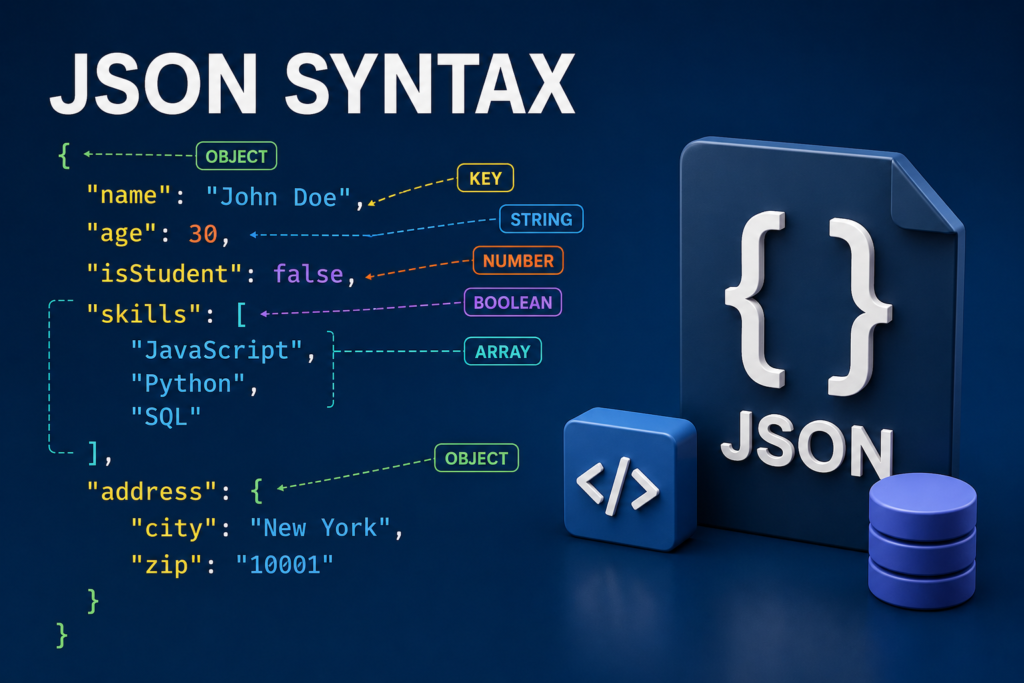

When learning JSON, one of the most important concepts to understand is json syntax square brackets. These brackets play a crucial role in organizing data and creating arrays that can store multiple values efficiently. Whether you are a beginner or an experienced developer, mastering json syntax square brackets can help you work with APIs, databases, and web applications more effectively.
The concept of json syntax square brackets is simple, yet extremely powerful. JSON is one of the most widely used data formats in modern programming, and square brackets allow developers to structure collections of related information in a clean and organized way. Understanding how these brackets function can improve your coding skills and reduce errors when handling data.
What Are JSON Syntax Square Brackets?
Json syntax square brackets are special characters represented by [ ] in JSON. They are used to define arrays, which are ordered collections of values.
Arrays can contain:
- Strings
- Numbers
- Booleans
- Objects
- Nested arrays
- Null values
Here is a simple example:
{
  "colors": ["red", "blue", "green"]
}
In this example, json syntax square brackets create an array that stores multiple color values.
Why JSON Syntax Square Brackets Matter
The importance of json syntax square brackets lies in their ability to group related data together. Instead of creating multiple individual variables, developers can store all related information within a single array.
Benefits include:
- Better organization
- Faster data processing
- Easier API integration
- Improved readability
- Simplified maintenance
Modern applications rely heavily on json syntax square brackets because they make data exchange efficient and structured.
Basic Structure of JSON Syntax Square Brackets
The structure is straightforward.
Example:
[
  "Apple",
  "Banana",
  "Orange"
]
The values inside the json syntax square brackets are separated by commas.
Each element maintains its order, allowing programs to access data by index positions.
Using JSON Syntax Square Brackets with Numbers
Arrays often store numerical data.
Example:
{
  "scores": [85, 90, 95, 100]
}
In this case, json syntax square brackets hold multiple numeric values within a single array.
This approach is useful for:
- Test scores
- Statistics
- Sales figures
- Measurements
JSON Syntax Square Brackets and Strings
Strings are among the most common data types stored within arrays.
Example:
{
  "countries": ["USA", "Canada", "Germany"]
}
Here, json syntax square brackets help manage a list of country names in an organized format.
This structure is frequently used in websites, applications, and APIs.
Working with Objects Inside Arrays
One powerful feature of json syntax square brackets is their ability to contain objects.
Example:
{
  "employees": [
    {
      "name": "John",
      "age": 30
    },
    {
      "name": "Sarah",
      "age": 28
    }
  ]
}
Using json syntax square brackets with objects allows developers to manage complex datasets efficiently.
Nested JSON Syntax Square Brackets
Arrays can also contain other arrays.
Example:
{
  "matrix": [
    [1, 2],
    [3, 4]
  ]
}
These nested json syntax square brackets create multidimensional structures often used in mathematics, analytics, and software development.
Nested arrays increase flexibility when handling large amounts of related data.
Common Rules for JSON Syntax Square Brackets
To use json syntax square brackets correctly, follow these rules:
- Arrays start with
[. - Arrays end with
]. - Values are separated by commas.
- No trailing comma after the last value.
- Arrays can contain different data types.
Following these guidelines helps prevent JSON parsing errors.
JSON Syntax Square Brackets vs Curly Braces
Many beginners confuse json syntax square brackets with curly braces.
Square Brackets [ ]
- Define arrays
- Store ordered collections
- Access values using indexes
Curly Braces { }
- Define objects
- Store key-value pairs
- Access values using keys
Understanding the difference between json syntax square brackets and curly braces is essential for working with JSON effectively.
Practical Applications of JSON Syntax Square Brackets
Developers use json syntax square brackets in countless real-world scenarios.
Examples include:
- E-commerce product lists
- Social media feeds
- User records
- API responses
- Mobile applications
- Dashboard analytics
Without json syntax square brackets, organizing large datasets would become much more complicated.
JSON Syntax Square Brackets in APIs
APIs frequently return data using arrays.
Example:
{
  "users": [
    {
      "id": 1,
      "name": "Alice"
    },
    {
      "id": 2,
      "name": "Bob"
    }
  ]
}
The json syntax square brackets make it possible to return multiple user records in a single response.
This improves efficiency and reduces the number of requests required.
Advantages of JSON Syntax Square Brackets
There are many benefits to using json syntax square brackets.
Easy Data Organization
Arrays help keep related information together.
Better Performance
Applications can process grouped data faster.
Scalability
Adding new values to arrays is simple.
Compatibility
Most programming languages support json syntax square brackets natively.
Enhanced Readability
Well-structured arrays make JSON easier to understand.
Common Mistakes with JSON Syntax Square Brackets
Developers sometimes encounter issues when working with arrays.
Common mistakes include:
Missing Commas
Incorrect:
["A" "B"]Correct:
["A", "B"]Extra Commas
Incorrect:
["A", "B",]Unclosed Brackets
Incorrect:
["A", "B"Paying attention to json syntax square brackets placement can eliminate these errors.
Best Practices for JSON Syntax Square Brackets
To maximize efficiency, follow these recommendations:
- Keep arrays organized.
- Use meaningful data structures.
- Avoid unnecessary nesting.
- Validate JSON before deployment.
- Maintain consistent formatting.
These practices ensure json syntax square brackets remain easy to manage and debug.
How Developers Use JSON Syntax Square Brackets Daily
Modern software development relies heavily on json syntax square brackets.
Developers use them when:
- Sending API requests
- Receiving API responses
- Managing configuration files
- Building web applications
- Creating mobile apps
- Processing large datasets
Because JSON is widely adopted, understanding json syntax square brackets is a valuable skill for every programmer.
Future Importance of JSON Syntax Square Brackets
As technology continues to evolve, JSON remains one of the most important data formats. Cloud computing, artificial intelligence, mobile development, and web services all depend on JSON structures.
The role of json syntax square brackets will continue to grow because they provide a reliable and efficient way to store collections of data. Developers who understand these structures will be better prepared for future programming challenges.
Conclusion
Understanding json syntax square brackets is essential for anyone working with JSON data. These brackets create arrays that organize information efficiently and support everything from simple lists to complex datasets. By learning the rules, avoiding common mistakes, and following best practices, developers can use json syntax square brackets confidently in APIs, web applications, mobile apps, and modern software projects.
Whether you are just starting your programming journey or refining your development skills, mastering json syntax square brackets will help you build cleaner, more organized, and more efficient applications.