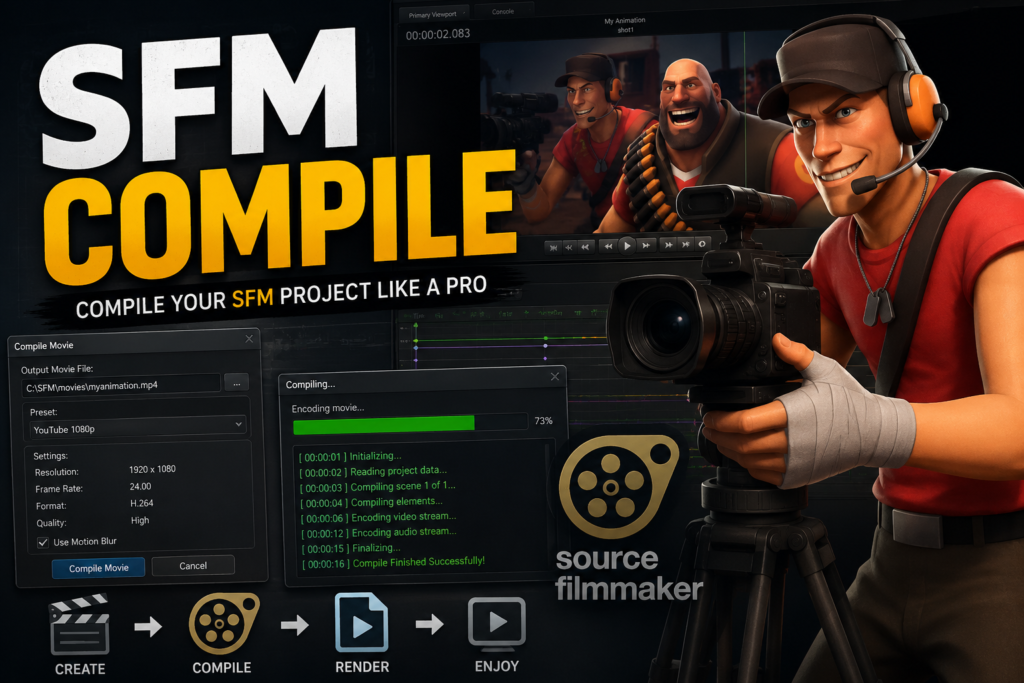

sfm compile is one of the most searched topics among Source Filmmaker users who want to create custom characters, maps, props, and animations. Understanding sfm compile helps creators convert project files into formats that Source Filmmaker can recognize and use correctly.
Whether you are a beginner learning the basics or an experienced creator working on advanced assets, mastering sfm compile can save time, reduce errors, and improve the overall quality of your projects. This guide explains everything you need to know in a simple and beginner-friendly way.
What Is SFM Compile?
sfm compile refers to the process of converting raw project files into game-ready assets that Source Filmmaker can load. During this process, models, textures, animations, and maps are transformed into formats supported by the Source Engine.
Without proper sfm compile, custom content may fail to load, display missing textures, or generate error models inside Source Filmmaker.
Why Is SFM Compile Important?
Using the correct sfm compile process offers several benefits:
How SFM Compile Works
The sfm compile workflow generally follows these steps:
Prepare Your Files
Before starting sfm compile, organize your project files carefully. This includes:
Keeping everything organized reduces mistakes later.
Configure Compile Settings
Every sfm compile process depends on proper configuration. Compile settings define:
Incorrect settings often lead to failed compilations.
Run the Compilation
Once everything is configured, the compile tools process the files and generate Source-compatible assets.
During sfm compile, the software checks:
If everything is correct, the compiled files become ready for Source Filmmaker.
Files Used During SFM Compile
Several file types are involved in sfm compile.
Model Files
These contain the 3D structure of characters, props, or objects.
Texture Files
Textures define the appearance, colors, and details of models.
Material Files
Materials tell Source Filmmaker how textures should behave, including lighting and reflections.
Animation Files
Animation data controls character movement and skeletal motion.
Configuration Files
Configuration files contain important compile instructions that guide the entire sfm compile process.
Common SFM Compile Errors
Many beginners experience problems while learning sfm compile. Here are some of the most common issues.
Missing Textures
Models appear pink and black when texture paths are incorrect.
Error Models
A large red “ERROR” model usually indicates that the compile process failed or files are missing.
Missing Bones
Improper skeleton configuration can prevent animations from working correctly.
Incorrect Material Paths
Wrong material directories often cause visual glitches.
Compile Failed
Syntax errors or incorrect configuration files may stop sfm compile entirely.
Tips for Successful SFM Compile
Following good practices makes sfm compile much easier.
Keep Files Organized
Store models, textures, and animations in clearly named folders.
Check File Names
Avoid unnecessary spaces or unusual characters.
Verify Material Paths
Double-check every material directory before compiling.
Test Frequently
Compile small changes instead of waiting until an entire project is complete.
Backup Your Project
Always keep backup copies before making major modifications.
Troubleshooting SFM Compile Problems
Most compile issues can be solved by reviewing project organization and configuration.
Advanced SFM Compile Techniques
As your experience grows, you can explore more advanced sfm compile workflows.
Advanced compilation techniques help create more polished and professional projects.
Frequently Asked Questions
What does sfm compile mean?
sfm compile is the process of converting project assets into formats that Source Filmmaker can load and use.
Why is my sfm compile failing?
Common reasons include missing files, incorrect material paths, configuration errors, or invalid model settings.
Can beginners learn sfm compile?
Yes. Beginners can learn sfm compile by starting with simple projects and gradually understanding the Source Engine workflow.
Does sfm compile affect performance?
Proper sfm compile can improve loading speed, reduce errors, and create more efficient assets.
Is sfm compile only for custom models?
No. sfm compile can also involve animations, maps, materials, props, and other Source Filmmaker assets.
Conclusion
Learning sfm compile is an essential step for anyone interested in creating custom Source Filmmaker content. A proper sfm compile workflow ensures that models, textures, animations, and maps function correctly while reducing common errors and improving project quality. By understanding the compile process, organizing files carefully, and following best practices, you can build professional-quality SFM projects with greater confidence and efficiency.