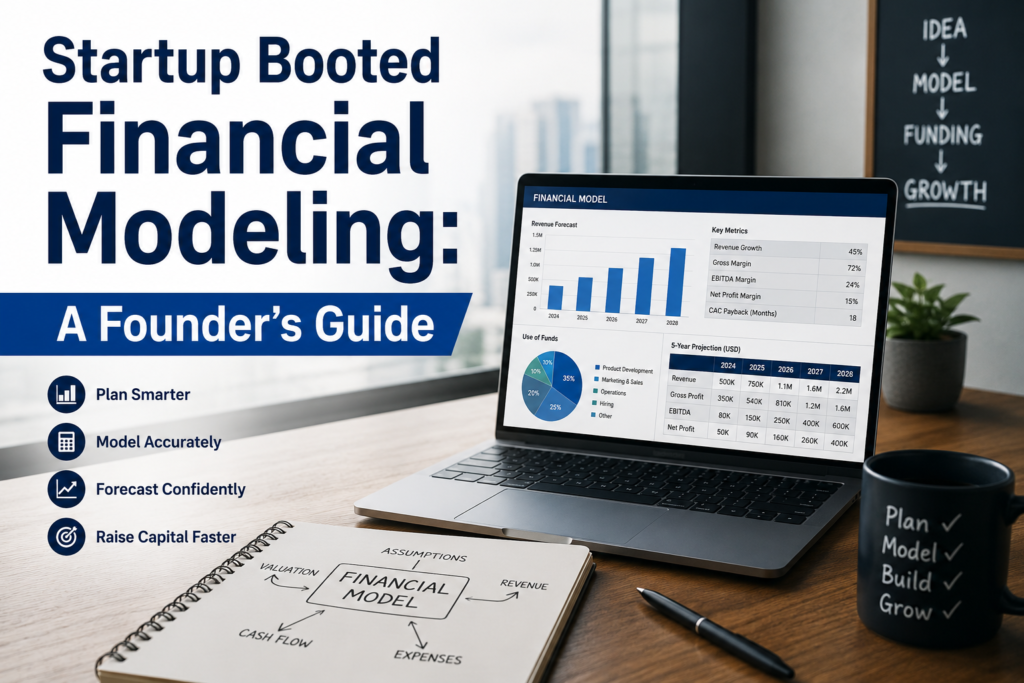

Launching and growing a business without external funding is one of the most challenging paths an entrepreneur can take. Success often depends on disciplined decision-making, careful resource allocation, and a deep understanding of financial performance. This is where startup booted financial modeling becomes essential. Founders who bootstrap their ventures cannot rely on investor capital to cover mistakes or cash shortages. Instead, they must use financial models to predict outcomes, manage risks, and guide sustainable growth.
A well-designed financial model acts as a roadmap for a bootstrapped startup. It helps founders understand revenue potential, control expenses, forecast cash flow, and make informed strategic decisions. Whether you are launching a software company, e-commerce business, consulting firm, or digital startup, mastering startup booted financial modeling can significantly improve your chances of long-term success.
Understanding Startup Booted Financial Modeling
Startup booted financial modeling refers to the process of creating financial forecasts and business scenarios specifically for startups that are funded by founders’ savings and operational revenue rather than venture capital or angel investment. Unlike heavily funded startups, bootstrapped businesses must prioritize profitability and cash preservation from the beginning.
Financial models typically include projected income statements, cash flow forecasts, balance sheets, and key performance indicators. These projections allow founders to estimate future financial performance and prepare for potential challenges. Since bootstrapped startups often operate with limited financial resources, accurate modeling becomes a critical management tool.
The primary objective is not merely predicting future revenue. Instead, startup booted financial modeling helps entrepreneurs understand how every business decision impacts financial stability. Hiring employees, launching marketing campaigns, introducing new products, or expanding into new markets all have financial consequences that should be reflected in the model.
Why Financial Modeling Matters for Bootstrapped Startups
Bootstrapped founders face unique challenges compared to venture-backed businesses. Every pound spent directly affects available cash reserves. Financial modeling provides visibility into the financial health of the company and helps prevent costly mistakes before they occur.
One major advantage of startup booted financial modeling is improved cash flow management. Many startups fail not because they lack customers but because they run out of cash. By forecasting income and expenses months in advance, founders can identify cash shortages early and take corrective action before problems become severe.
Financial models also support strategic planning. Founders can test different growth scenarios, evaluate pricing strategies, and assess the financial impact of operational changes. This data-driven approach reduces uncertainty and improves decision-making during critical stages of growth.
Key Components of a Startup Financial Model
Every startup booted financial modeling framework should begin with revenue forecasting. Revenue assumptions should be based on realistic customer acquisition rates, pricing strategies, conversion rates, and market demand. Conservative estimates are generally preferable because they reduce the risk of overestimating future performance.
Expense forecasting forms the second major component. Founders should account for fixed expenses such as software subscriptions, rent, salaries, and insurance, as well as variable costs linked to customer growth. Understanding the relationship between revenue and expenses helps maintain healthy operating margins.
Cash flow forecasting ties everything together. Even profitable businesses can experience cash flow issues if customer payments arrive late or expenses increase unexpectedly. A detailed cash flow forecast enables founders to monitor liquidity and ensure the business can meet its financial obligations.
Building Realistic Revenue Projections
Revenue forecasting is often the most challenging aspect of startup booted financial modeling. New businesses typically lack historical data, making future projections difficult. Founders should therefore rely on market research, industry benchmarks, and realistic sales assumptions rather than optimistic expectations.
A practical approach involves creating multiple revenue scenarios. The conservative scenario reflects slower growth, while moderate and aggressive scenarios explore more optimistic outcomes. Comparing these scenarios helps entrepreneurs understand possible future results and prepare contingency plans.
Customer acquisition costs, customer lifetime value, and conversion rates should also be incorporated into revenue forecasts. These metrics provide valuable insight into whether growth strategies are financially sustainable and scalable over time.
Managing Costs and Preserving Cash
Cost management is particularly important for bootstrapped startups because resources are limited. Startup booted financial modeling enables founders to identify unnecessary expenses and prioritize investments that generate measurable returns.
Many successful bootstrapped companies focus on lean operations during their early stages. Instead of hiring large teams immediately, they automate processes, outsource specialized tasks, and invest selectively in growth initiatives. Financial models help evaluate the financial impact of these decisions before implementation.
Regular expense reviews should be incorporated into the financial planning process. Market conditions, supplier costs, and operational requirements change over time. Updating expense assumptions ensures that the model remains accurate and useful as a decision-making tool.
Scenario Planning and Risk Management
One of the most valuable features of startup booted financial modeling is scenario analysis. Business environments are unpredictable, and founders must prepare for various outcomes. Scenario planning allows entrepreneurs to explore how different events may affect financial performance.
For example, a founder might model the impact of slower customer acquisition, increased advertising costs, or delayed product launches. Understanding these possibilities helps create risk mitigation strategies before problems arise. Preparation often determines whether a startup survives challenging periods.
Scenario planning also supports growth opportunities. If demand increases faster than expected, founders can evaluate the financial implications of hiring staff, increasing inventory, or expanding operations. This proactive approach improves business agility and resilience.
Financial Metrics Every Founder Should Track
A strong startup booted financial modeling framework includes key performance indicators that measure business health. Monitoring these metrics allows founders to evaluate progress and identify areas requiring attention.
Revenue growth rate is one of the most important indicators because it reflects market traction and customer demand. Consistent growth suggests that products or services are meeting customer needs effectively. Declining growth rates may signal competitive pressures or operational challenges.
Other critical metrics include gross margin, operating margin, cash runway, customer acquisition cost, customer lifetime value, and monthly recurring revenue where applicable. Tracking these indicators regularly provides actionable insights that support better strategic decisions.
Using Financial Models for Sustainable Growth
Growth is a common objective for startups, but growth without financial discipline can create significant problems. Startup booted financial modeling helps founders balance expansion with sustainability by showing how growth initiatives affect profitability and cash reserves.
Before launching new products or entering new markets, founders can use financial models to estimate investment requirements and expected returns. This analysis reduces uncertainty and helps prioritize opportunities with the highest potential value.
Sustainable growth often involves incremental improvements rather than rapid expansion. Financial modeling encourages disciplined planning and helps ensure that growth efforts strengthen the business rather than strain its resources.
Information Table
| Topic | Description |
|---|---|
| Primary Focus | Startup booted financial modeling |
| Business Type | Bootstrapped startups |
| Main Goal | Financial planning and sustainability |
| Key Benefit | Improved cash flow management |
| Essential Components | Revenue, expenses, cash flow |
| Growth Strategy | Sustainable and data-driven |
Conclusion
Startup booted financial modeling is far more than a spreadsheet exercise. It is a strategic management practice that helps entrepreneurs make informed decisions, manage risks, and build resilient businesses. For bootstrapped founders, financial modeling provides the visibility needed to navigate uncertainty and maintain financial stability without relying on outside investors.
By developing accurate revenue forecasts, controlling expenses, monitoring cash flow, and planning for multiple scenarios, founders gain a clearer understanding of their business trajectory. This knowledge supports smarter decisions and increases confidence during periods of growth and change.
The most successful bootstrapped startups treat financial modeling as an ongoing process rather than a one-time task. Regular updates, realistic assumptions, and consistent performance tracking ensure that the model remains relevant as the business evolves. When used effectively, startup booted financial modeling becomes a powerful tool for achieving sustainable growth, preserving cash, and creating a profitable company built to last.