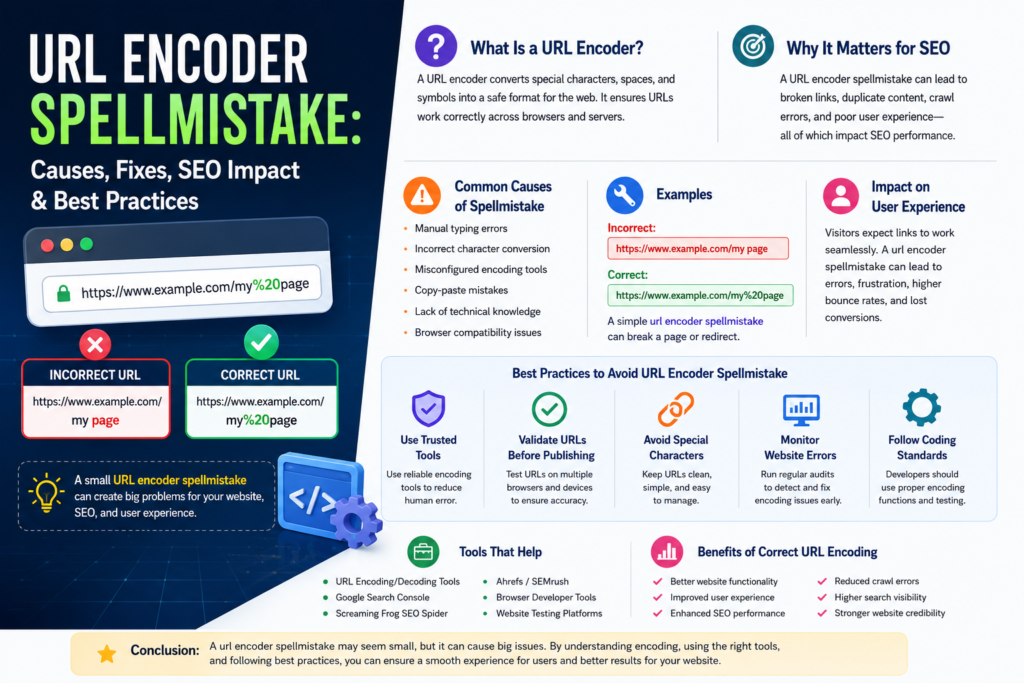

The term url encoder spellmistake has become increasingly common among website owners, developers, digital marketers, and SEO professionals. Whether you are working on website URLs, online forms, or web applications, understanding a url encoder spellmistake is essential for maintaining proper website functionality and user experience.
A url encoder spellmistake can lead to broken links, indexing issues, incorrect redirects, and various technical problems that affect website performance. Learning how to identify and correct a url encoder spellmistake can save time while improving both usability and search engine optimization.
What Is a URL Encoder?
A URL encoder is a tool or process that converts special characters, spaces, and symbols into a format that can be safely transmitted over the internet. URLs can only contain certain characters, so encoding ensures compatibility across browsers and servers.
When a url encoder spellmistake occurs, the encoded URL may not function correctly. This can result in inaccessible pages, broken resources, or incorrect website behavior. Therefore, understanding encoding principles helps prevent a url encoder spellmistake from causing larger technical issues.
Understanding URL Encoding
URL encoding replaces unsafe characters with percentage symbols followed by hexadecimal values. For example, a space is commonly converted into “%20”.
Without proper encoding, websites may struggle to process information accurately. A simple url encoder spellmistake can alter URL structures and prevent users from reaching intended pages. This makes URL encoding a critical aspect of web development and SEO.
Common Causes of URL Encoder Spellmistake
There are several reasons why a url encoder spellmistake may occur:
- Manual typing errors
- Incorrect character conversion
- Misconfigured encoding tools
- Copy-paste mistakes
- Lack of technical knowledge
- Browser compatibility issues
Each of these factors can contribute to a url encoder spellmistake, making it important to verify URLs before publishing them online.
Why URL Encoder Spellmistake Matters for SEO
Search engines rely on properly formatted URLs to crawl and index content effectively. A url encoder spellmistake can create duplicate pages, broken links, and indexing challenges.
When search engine bots encounter URLs affected by a url encoder spellmistake, they may struggle to understand page structure. This can reduce visibility in search results and negatively impact organic traffic.
Proper URL management minimizes the risk of a url encoder spellmistake and supports stronger SEO performance.
Examples of URL Encoder Spellmistake
Consider a URL containing spaces or special symbols. If these characters are not encoded correctly, the resulting link may fail.
For example:
Incorrect:
website.com/my page
Correct:
website.com/my%20page
This type of url encoder spellmistake is common among beginners who are unfamiliar with URL encoding standards. Recognizing these errors early prevents technical complications later.
Impact on User Experience
A url encoder spellmistake can significantly affect user experience. Visitors expect links to work seamlessly, and any interruption may lead to frustration.
Users encountering a page error caused by a url encoder spellmistake may leave the website immediately. Higher bounce rates and lower engagement signals can indirectly affect SEO and conversions.
Maintaining accurate URL encoding helps ensure visitors enjoy a smooth browsing experience.
How Developers Prevent URL Encoder Spellmistake
Experienced developers use several methods to avoid a url encoder spellmistake:
- Automated URL encoding tools
- Framework-based encoding functions
- URL validation systems
- Testing before deployment
- Continuous monitoring
These practices reduce the likelihood of a url encoder spellmistake and improve overall website reliability.
Best URL Encoding Practices
Following best practices can prevent a url encoder spellmistake from occurring frequently.
Use Trusted Encoding Tools
Reliable tools automatically convert special characters into valid URL formats. This reduces human error and minimizes the chances of a url encoder spellmistake.
Validate URLs Before Publishing
Testing URLs ensures they function properly across browsers and devices. Validation can quickly identify a potential url encoder spellmistake before users encounter problems.
Avoid Unnecessary Special Characters
Simpler URLs are easier to manage and less likely to suffer from a url encoder spellmistake. Keeping URLs clean improves readability and SEO.
Monitor Website Errors
Regular website audits help detect issues linked to a url encoder spellmistake. Early detection prevents long-term SEO and usability concerns.
Tools That Help Fix URL Encoder Spellmistake
Many online tools can identify and resolve a url encoder spellmistake quickly.
Popular solutions include:
- URL encoding generators
- Web developer tools
- SEO auditing platforms
- Browser inspection tools
- Website testing software
These resources simplify troubleshooting and help eliminate a url encoder spellmistake before it impacts performance.
Benefits of Correct URL Encoding
Avoiding a url encoder spellmistake provides several advantages:
- Better website functionality
- Improved user experience
- Enhanced SEO performance
- Reduced crawl errors
- Higher search engine visibility
- Stronger website credibility
Proper encoding ensures websites operate efficiently while maintaining compatibility across platforms.
URL Encoder Spellmistake in E-Commerce Websites
E-commerce platforms often handle thousands of product URLs. A single url encoder spellmistake can affect product accessibility and sales.
When product pages become unreachable due to a url encoder spellmistake, businesses risk losing customers and revenue. Consistent URL management is therefore essential for online stores.
URL Encoder Spellmistake and Website Security
Security is another important reason to address a url encoder spellmistake. Improper URL handling can create vulnerabilities or unexpected application behavior.
By ensuring accurate encoding, developers reduce risks associated with malformed URLs and improve overall system security. Preventing a url encoder spellmistake contributes to a safer online environment.
Future Importance of URL Encoding
As websites become more complex, the importance of avoiding a url encoder spellmistake continues to grow. Modern applications rely heavily on dynamic URLs and data transmission.
Organizations that prioritize proper URL encoding practices are better equipped to maintain performance, security, and search visibility. Understanding how a url encoder spellmistake occurs will remain a valuable skill for developers and marketers alike.
Conclusion
A url encoder spellmistake may appear minor, but its effects can be significant. From broken links and poor user experience to SEO challenges and security concerns, the consequences are far-reaching.
By understanding URL encoding principles, using reliable tools, validating links, and following best practices, businesses can prevent a url encoder spellmistake from affecting website performance. Investing time in proper URL management helps create a more reliable, user-friendly, and search-engine-optimized website.